|
|
||||||||||||||
| Type Approval | |||||
|
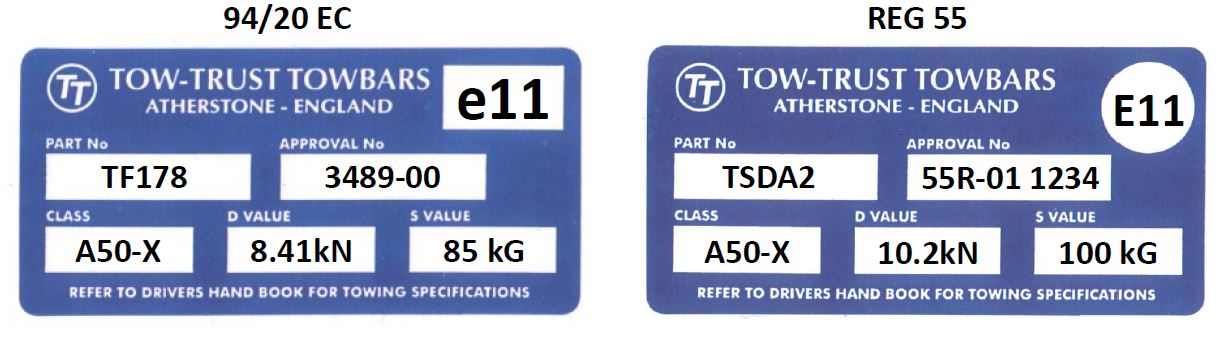
Type approval was introduced for towbars on cars registered from 1 August 1998 in Great Britain (20 April 1999 in Northern Ireland). It moderised the industry and along the way some companies went out of business or had to stop making towbars for cars. By 2012 type approval had been extended to cover vans, chassis cabs and pickups. This also included motorhomes which for the first time now require type approved towbars.
- Before the towbar can be approved it must be placed on a rig to complete a two million cycle fatigue test which is witnessed by the appropriate authority. In the UK this is the Vehicle Certification Agency (VCA), part of the Department for Transport. -
The standards also specify the dimensions, locations and clearance
of the 50mm towball.
Exceptions The main types of vehicles that do not require type approved towbars are vehicles that are imported from outside the EU ("grey imports") and vehicles that where registered before type approval became law. So for example a 1993 Mazda Bongo imported from Japan does not require a type approved towbar because it is a grey import. A 1997 Renault Laguna does require a type approved towbar because it was registered before the type approval date. Vehicles not approved for towing A small minority of vehicles are not approved for towing, these tend to be -
Small city cars (such as the Volkswagen Up! or Peugeot 107) These vehicles will have a towing weight of zero kg and no specificed towbar mounting points. One some of these vehicles you may be able to fit a towbar tjust for mounting a cycle carrier (or load carrier). One many vehicles however the towbar manufacuters have not confirmed that the towbar will fit.
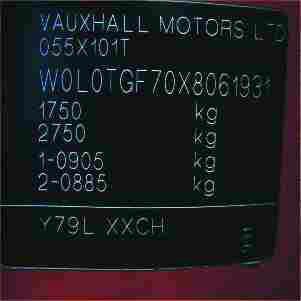
How to tell if a vehicle is approved for towing
|
Guide to Fixed Flange towbars | ||||
| Guide to Fixed Swanneck towbars | |||||
| Guide to Detachable Swannneck towbars | |||||
| Guide to Detachable Flange towbars | |||||
| Guide to Towbar Makes | |||||
| Guide to Towbar Type Approval | |||||
|
or telephone: 01925 730 005 |
|
||||
|
Towbars Direct, Norbrook Trailers Ltd, Tarporley Road (A49), Whitley, Warrington, Cheshire WA4 4DS Telephone: 01925 730 005 Email: sales@towbarsdirect.co.uk |
|||||
|
|